Studio AI-Native Production

W-03Production dossier

Nereis

Nereis is a short film about one small, deliberate act of disobedience. Here is how I made it, and what I had to throw away. The tools are new, and the craft they demand is the old one: continuity, rhythm, sound, and cutting what does not work.

Runtime 02:53 Shots 27 Generated 43 Versions 26

P-03.1The film

Expedition I: Nereis

A survey lands on a bioluminescent ocean world that reads as dead from orbit. It isn’t. She walks out to the shallows, finds a forest that answers light with light, and makes one cut she was not supposed to make. The world answers that too.

VELIS-03 — Expedition I: Nereis

Watch on Films →
The complete short02:53 Original score & voice

VELIS-03 — Teaser

Watch on Films →
It stops on the world’s answer, before the resolution00:33

P-03.2Pre-production

The World First

The film did not start with a shot. It started with a dossier of twenty-five boards, written natively in French: four named and coded biomes, orbital views, figures at human scale, and a planetary map that locks the system together. By the time shooting began, the world already knew what colour its night was.

See all 35 boards

P-03.3The abandoned itinerary

The First Version Was An Itinerary

Before Nereis there was a route: fourteen frames and six stops, from orbit to approach, low pass, shore, canopy and marsh. I generated the whole thing, then set it aside. Read in order, it walks a route instead of telling a story: every frame is a place, and none of them is a scene. Four stops survived into the final cut: the orbit, the approach, the pass and the canopy. The marsh went with the reveal that was cut.

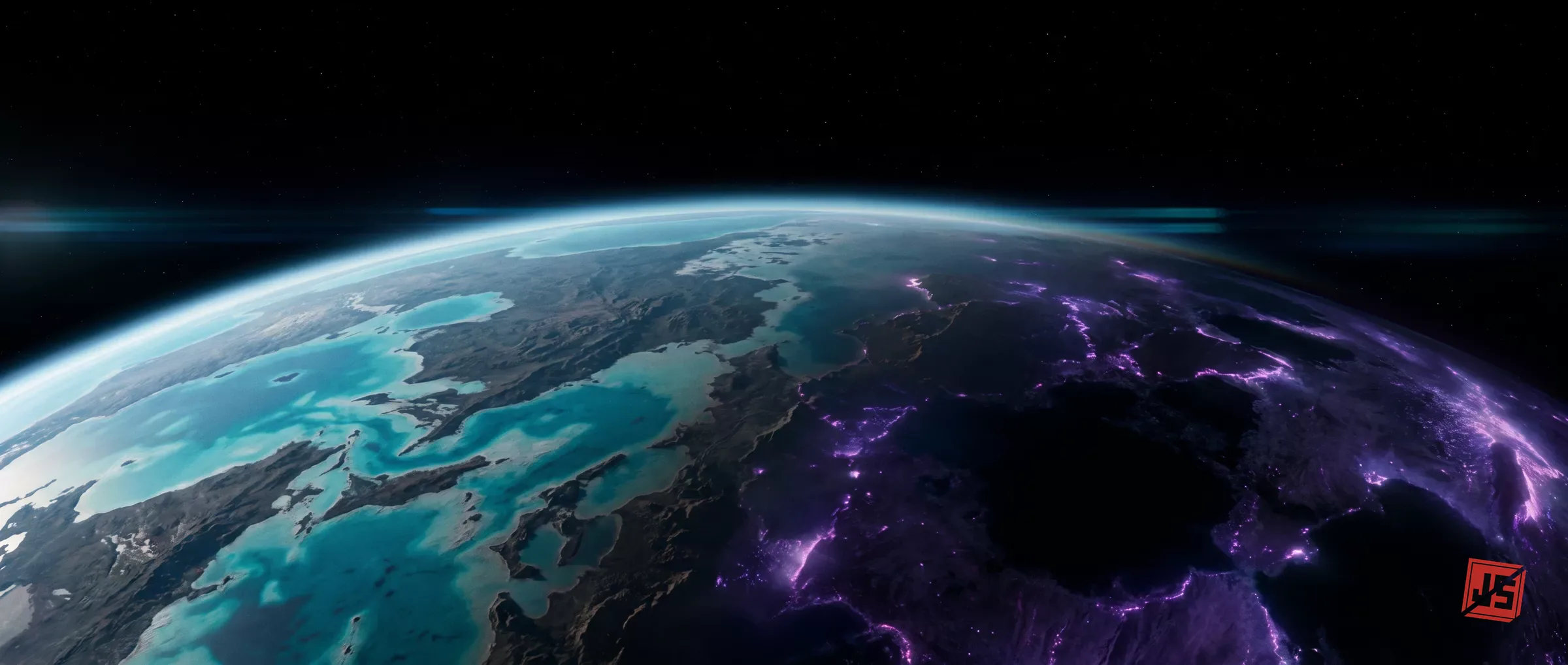
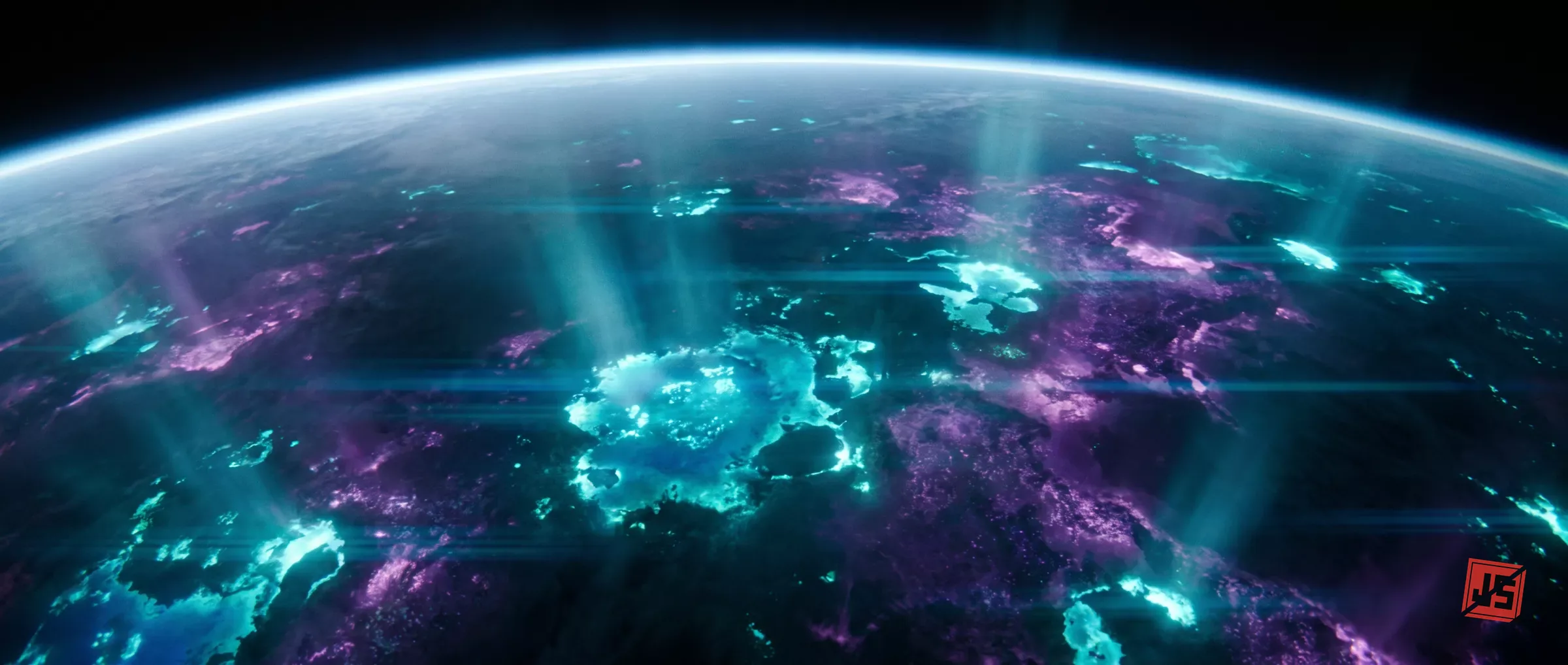
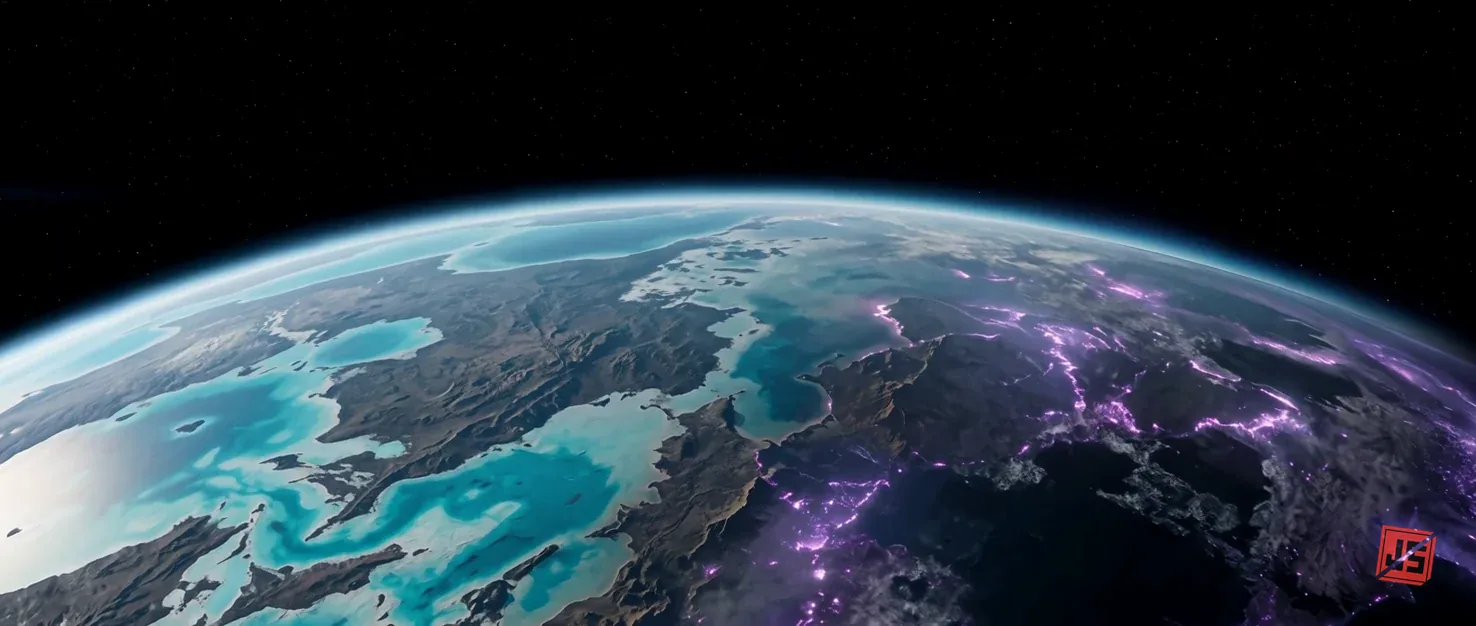
The planet from high orbit: turquoise shallows on the day side, the night side veined with violet light, stars beyond the atmosphere
S1a orbit, the planet whole
The same planet closer in, the whole surface veined turquoise and violet under a thin bright limb
S1b orbit, one step lower
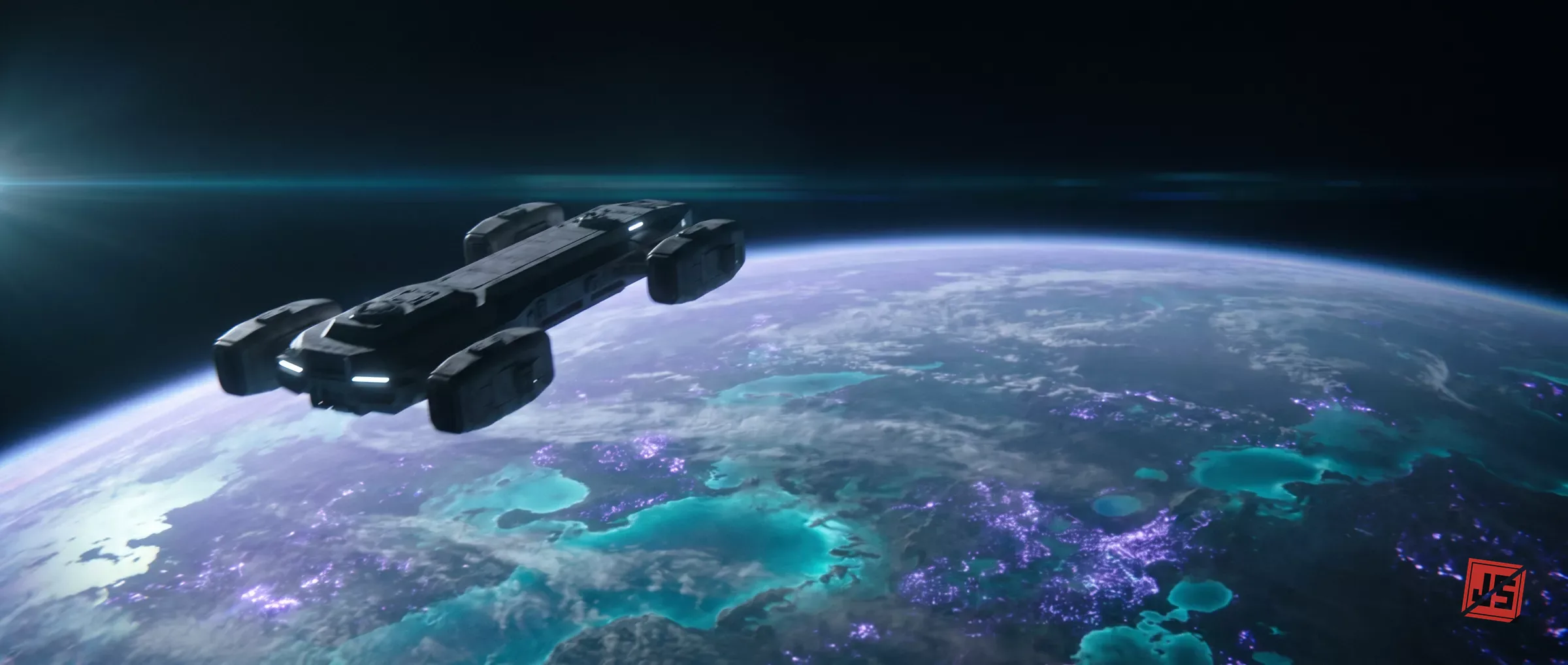
A dark angular ship crossing the top of frame above the lit planet, the surface far below
S2a the approach: the ship enters frame
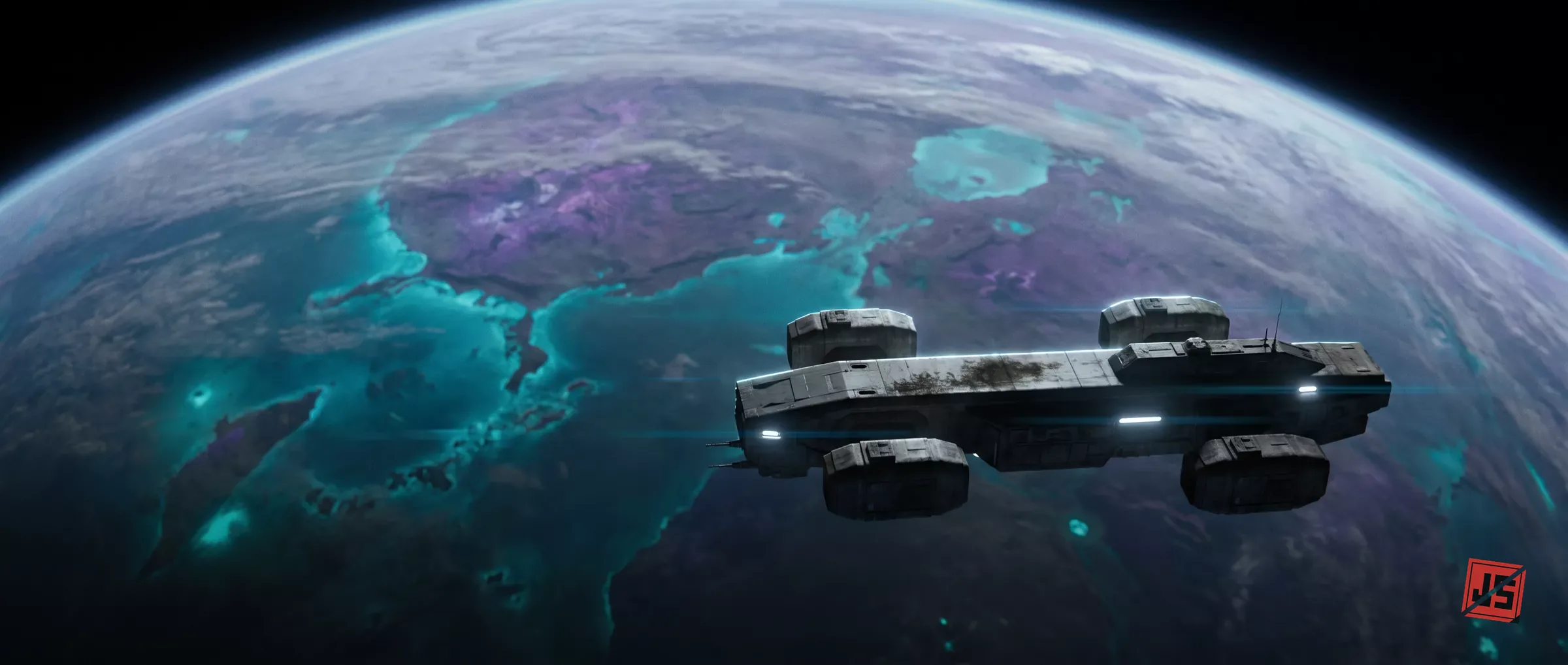
The ship in profile, running lights on, the planet’s cloud deck and turquoise reefs filling the frame behind it
S2b the approach: the descent
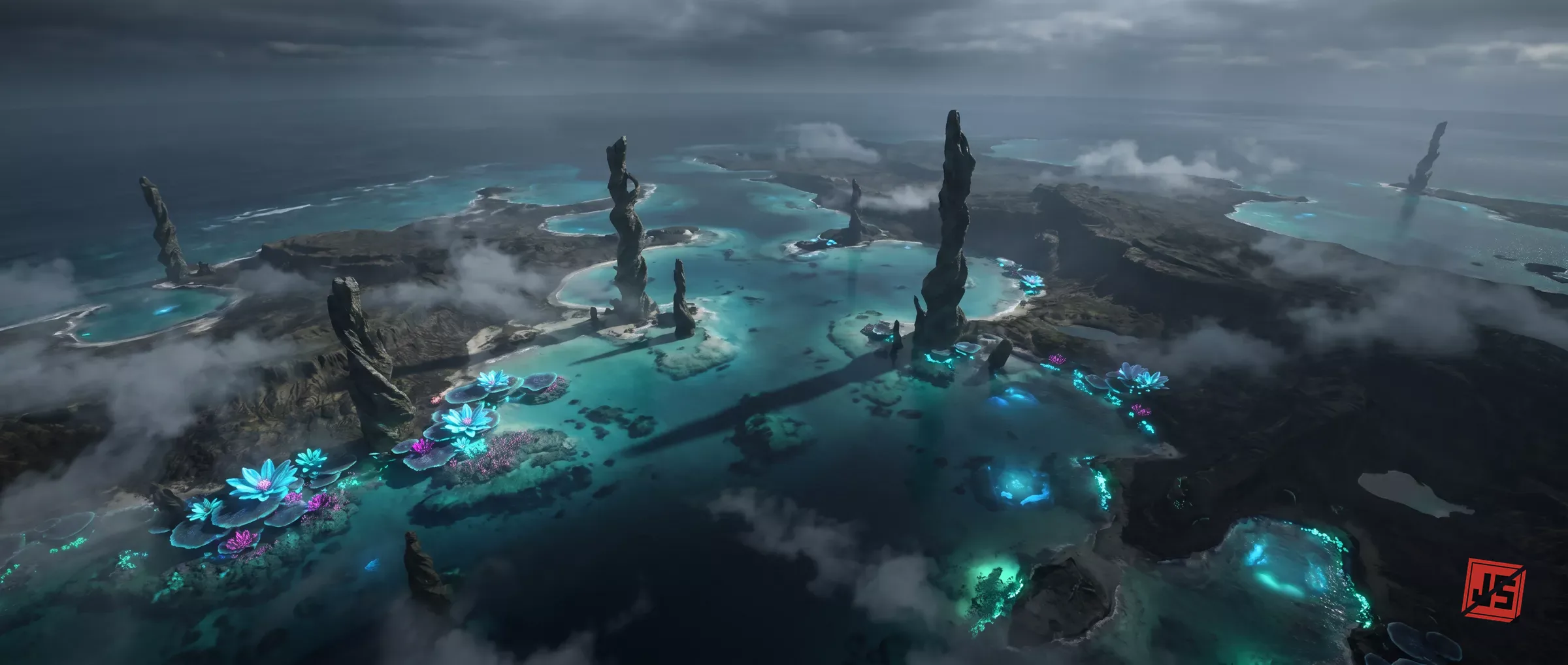
An aerial view of an archipelago: pale lagoons, dark stone spires standing out of the water, colonies of glowing blue and magenta flowers, cloud shadow over everything
S3a — the high pass over the reef
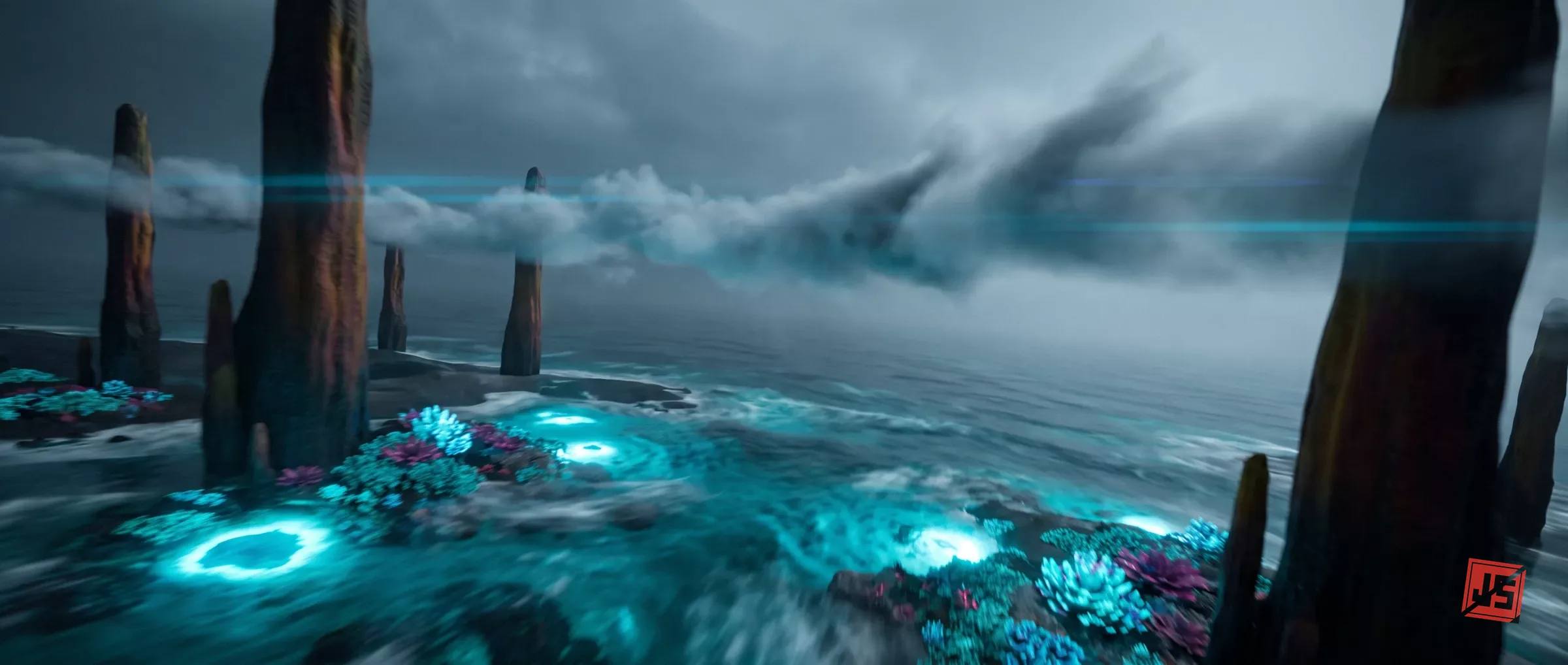
Low over the water between stone spires, glowing turquoise rings and clumps of flowers in the shallows, a heavy storm sky ahead
S3b — the low pass, at water height
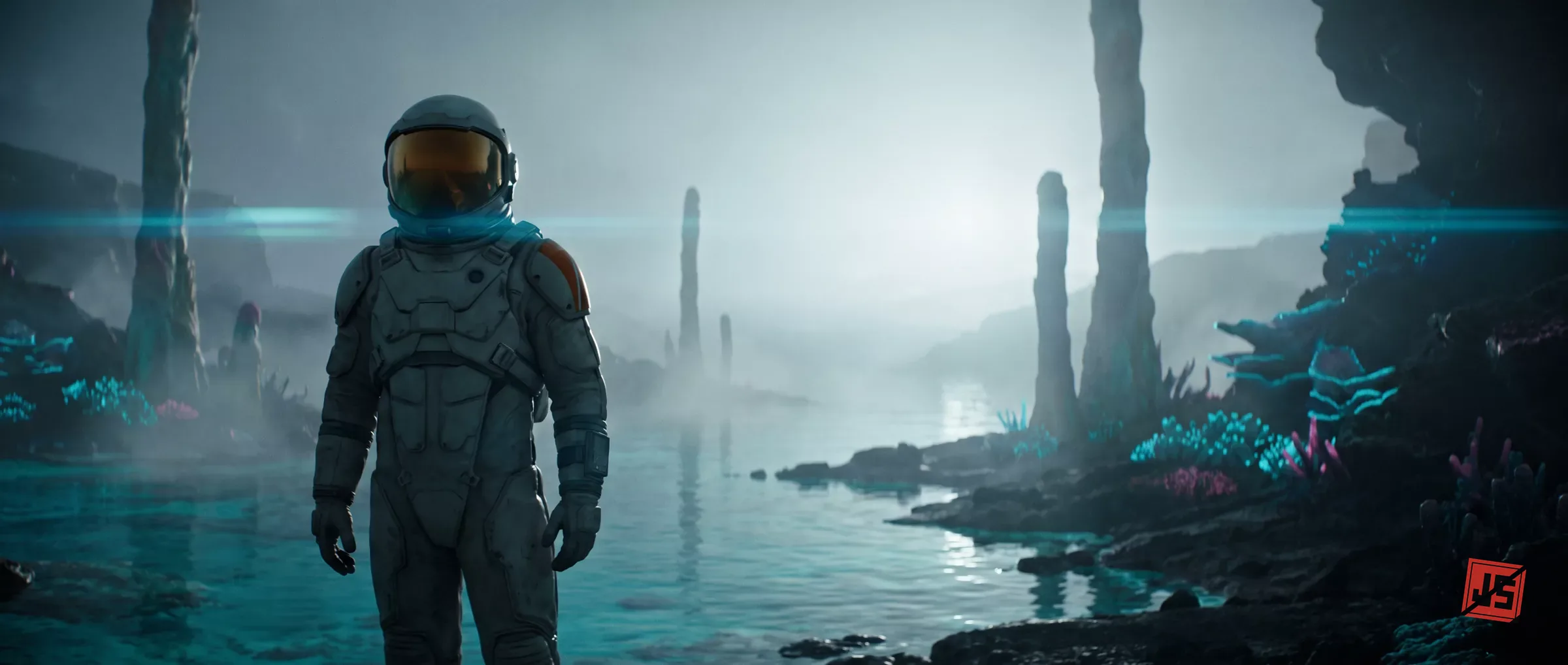
The astronaut standing on a rocky bank in the mist, gold visor lit, a channel of pale water behind her, glowing pink and blue growths at the edges
S4a — the shore
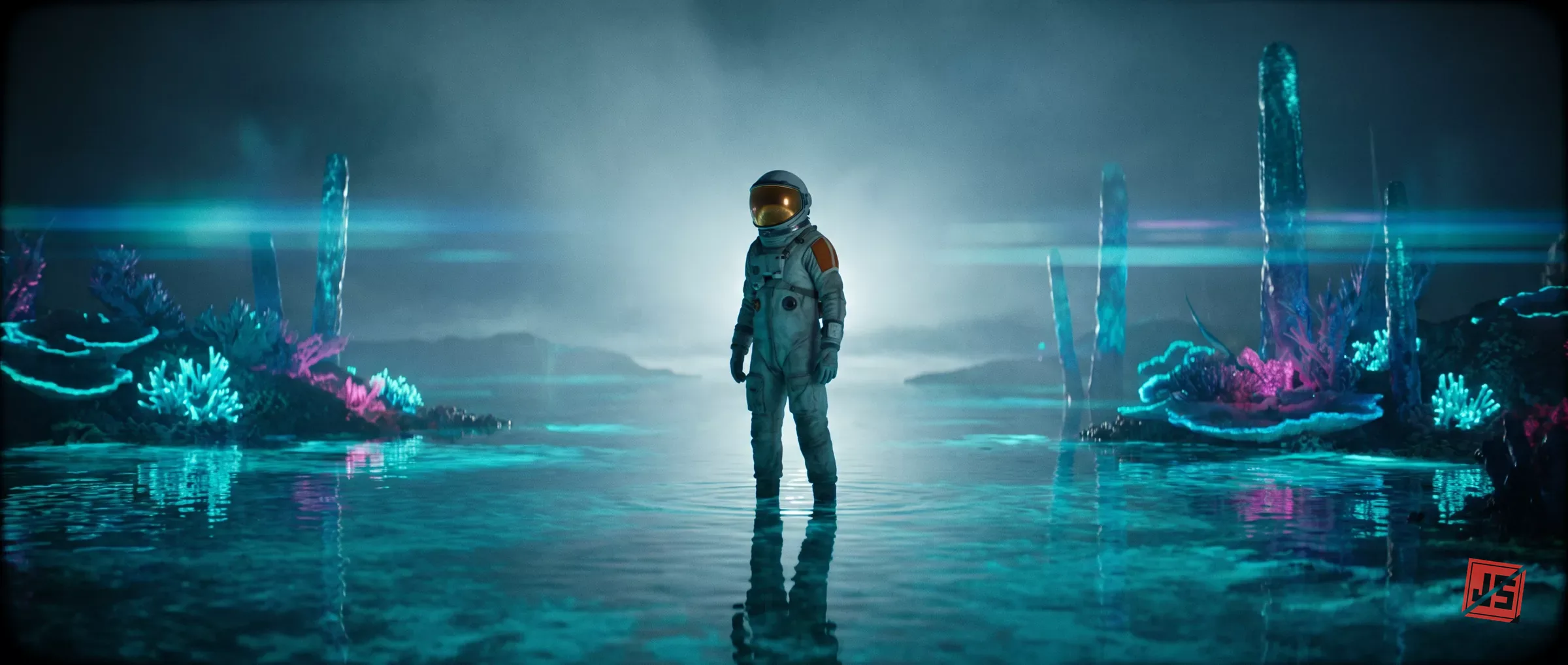
The astronaut standing ankle-deep in still water, her reflection under her, turquoise coral clumps glowing on both banks
S4b — the shore, in the water
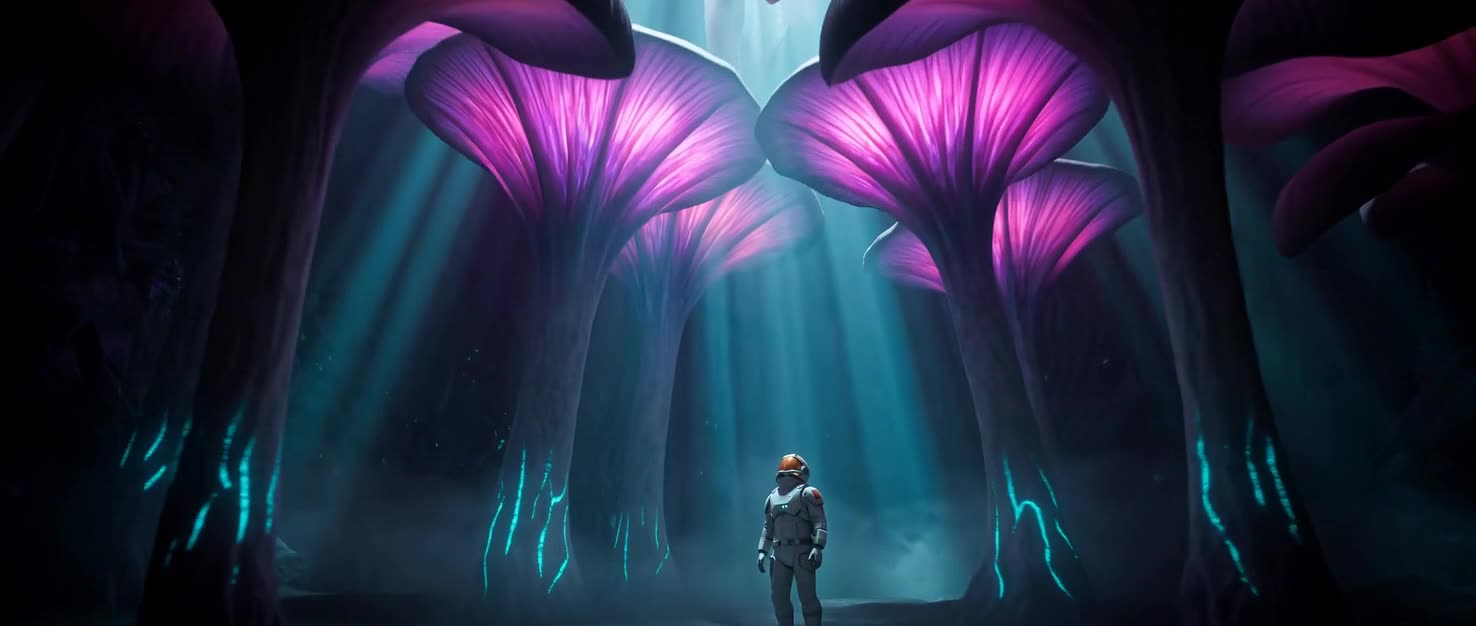
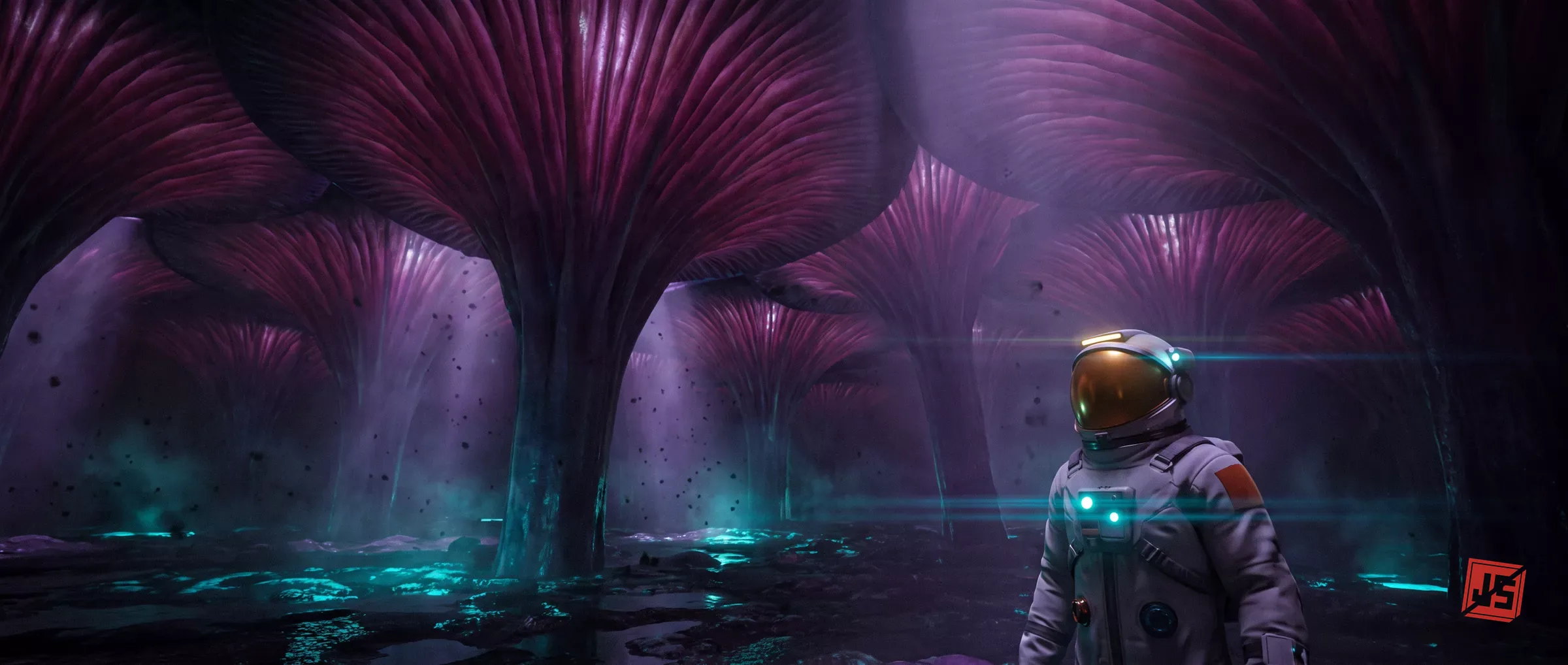
A forest of huge magenta caps splayed wide overhead on thick trunks, turquoise light on the ground, the astronaut at the right edge of frame
S5a v1 — the canopy was asked for closed; it came back open. Kept anyway: this is the film’s shot at 1:12.
A vault of pink pointed pods hanging shut from thick stems, mist between them, the astronaut tiny at the right of frame
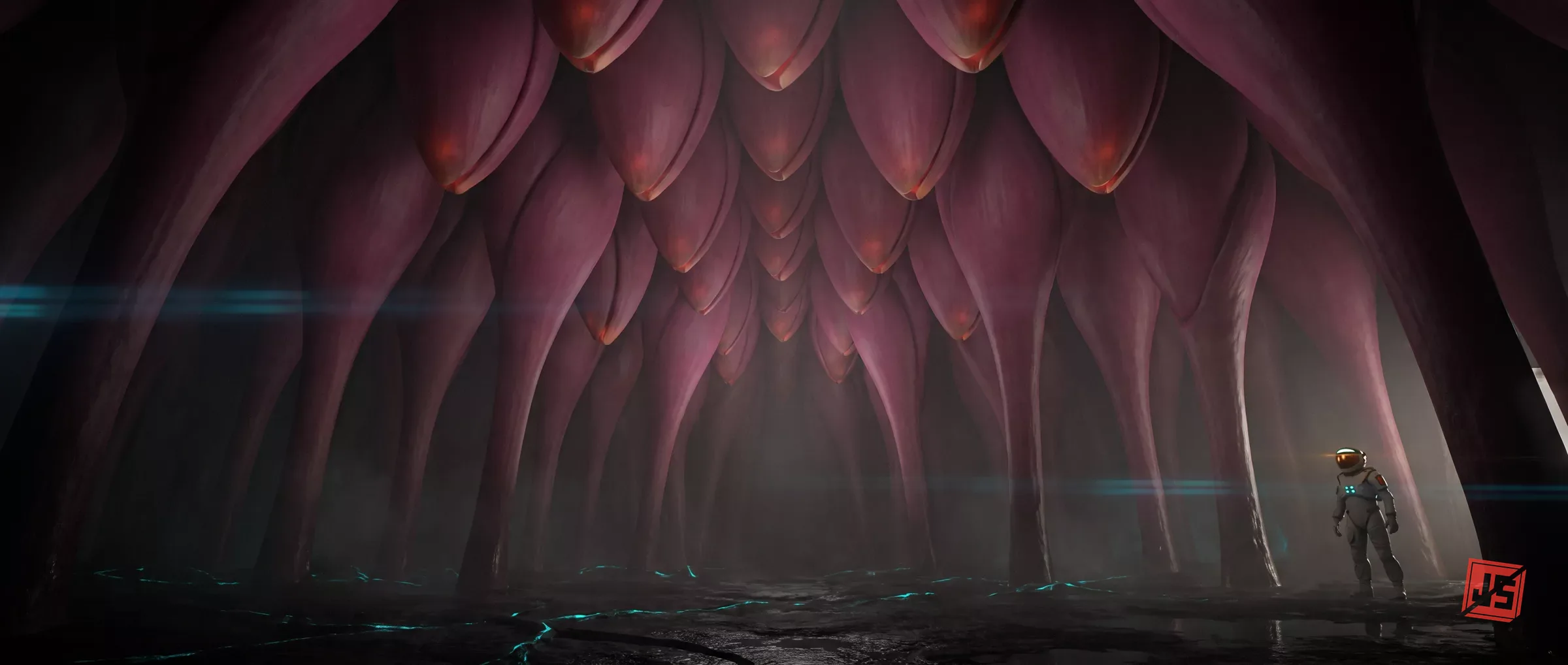
S5a v2a — closed, at the second attempt
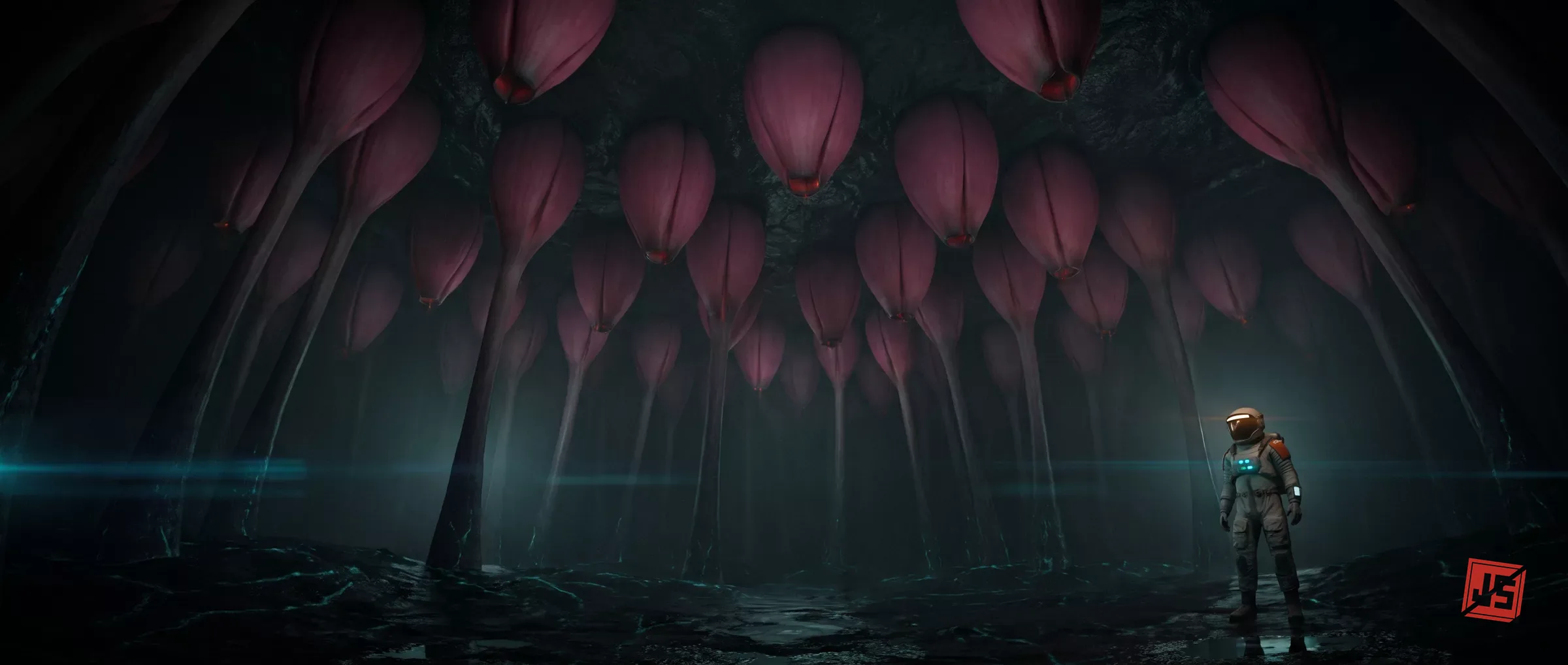
Dozens of closed pink buds hanging from dark stalks in a low dark hall, the astronaut standing small at the right
S5a v2b — the other closed version
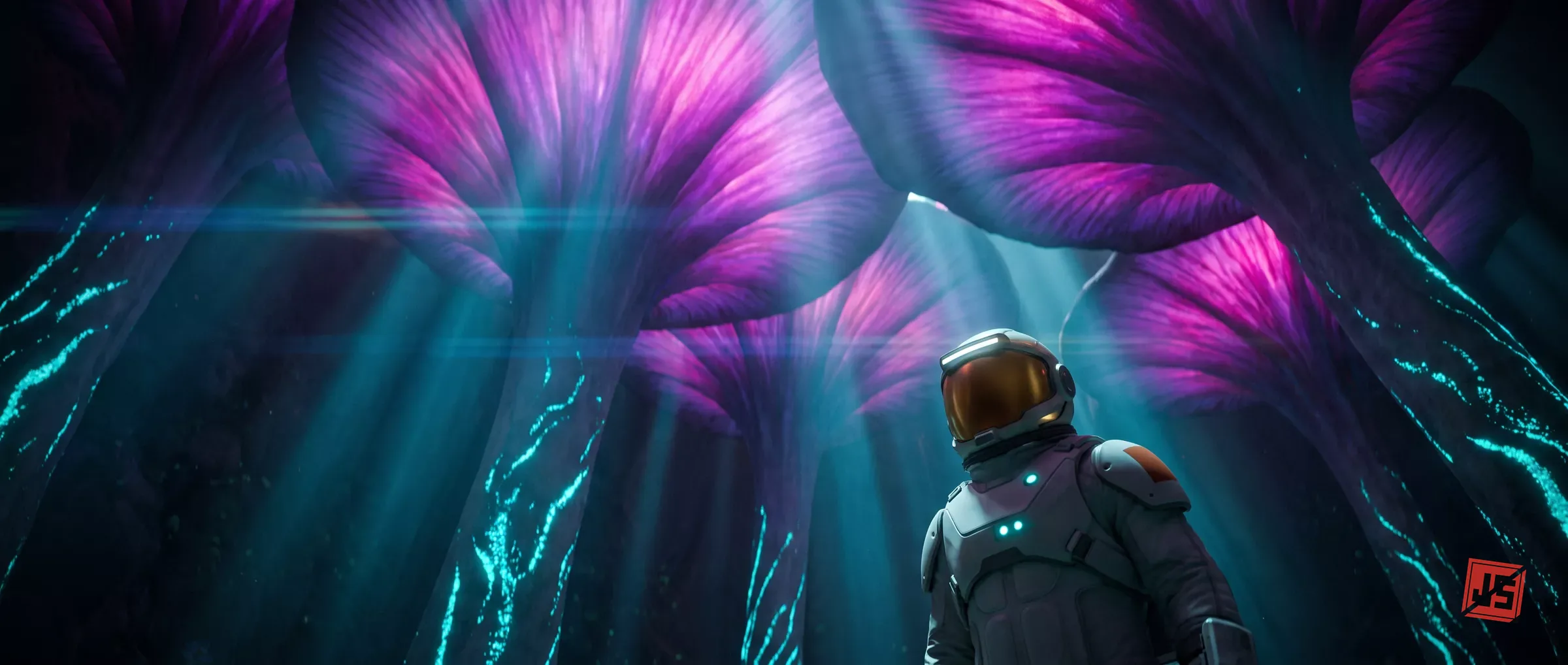
Seen from below: violet caps opened wide like ribbed umbrellas, shafts of light between them, turquoise filaments climbing the trunks, the astronaut looking up at the right
S5b — the canopy open
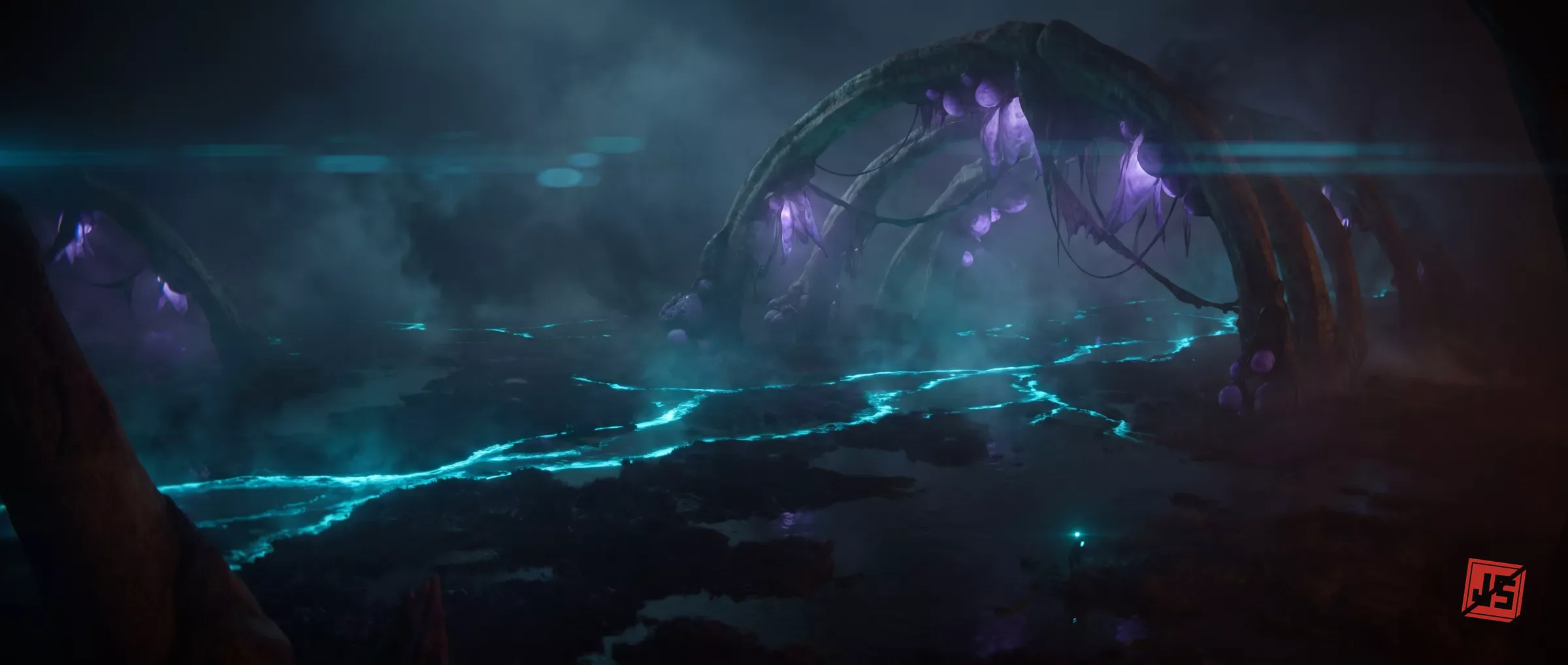
A dark marsh under mist, arches of roots hung with violet lamps, turquoise streams running through the flats
S6a — the marsh, as landscape
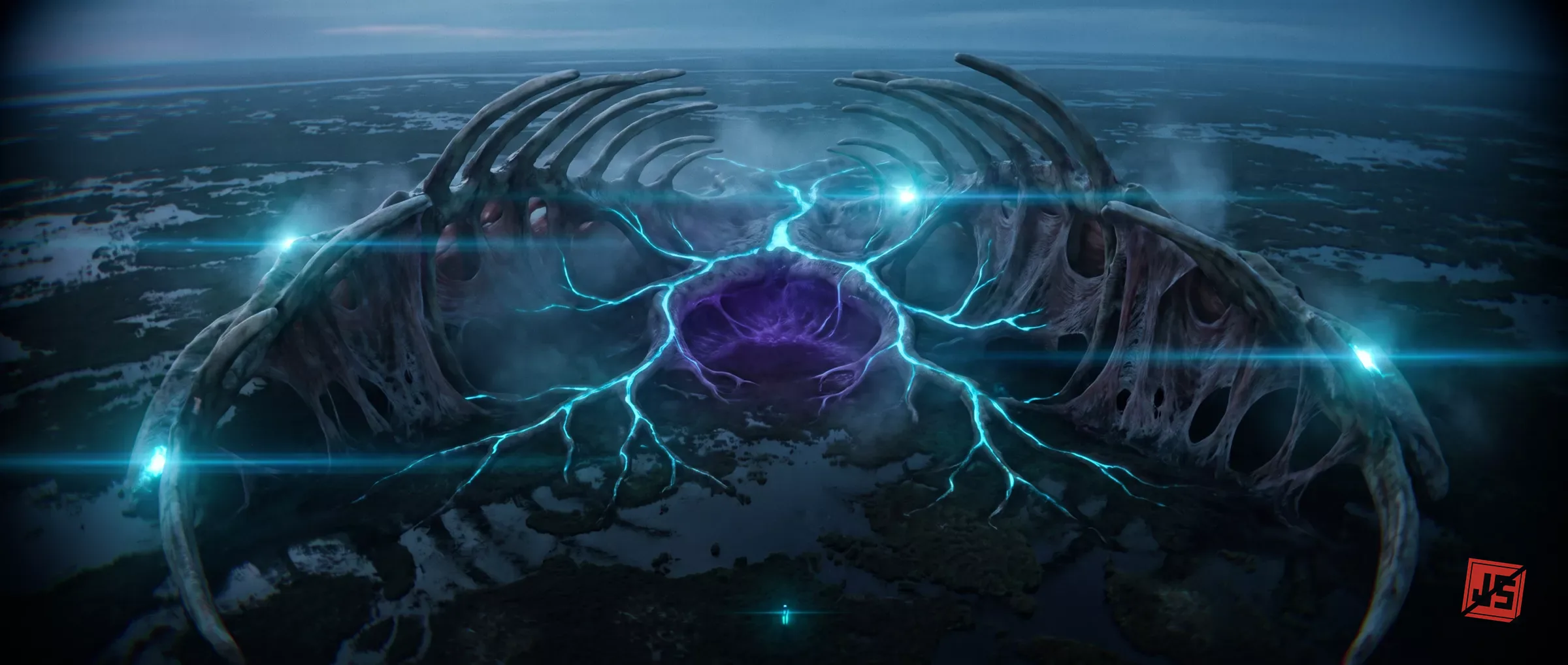
A vast ribcage rising out of the flooded plain, a violet mass held at its centre, cyan lightning branching out of it across the water
S6b — the marsh, as anatomy: a ribcage laid over the water

P-03.4Starting frames

A Shot Is Generated Between Two Frames

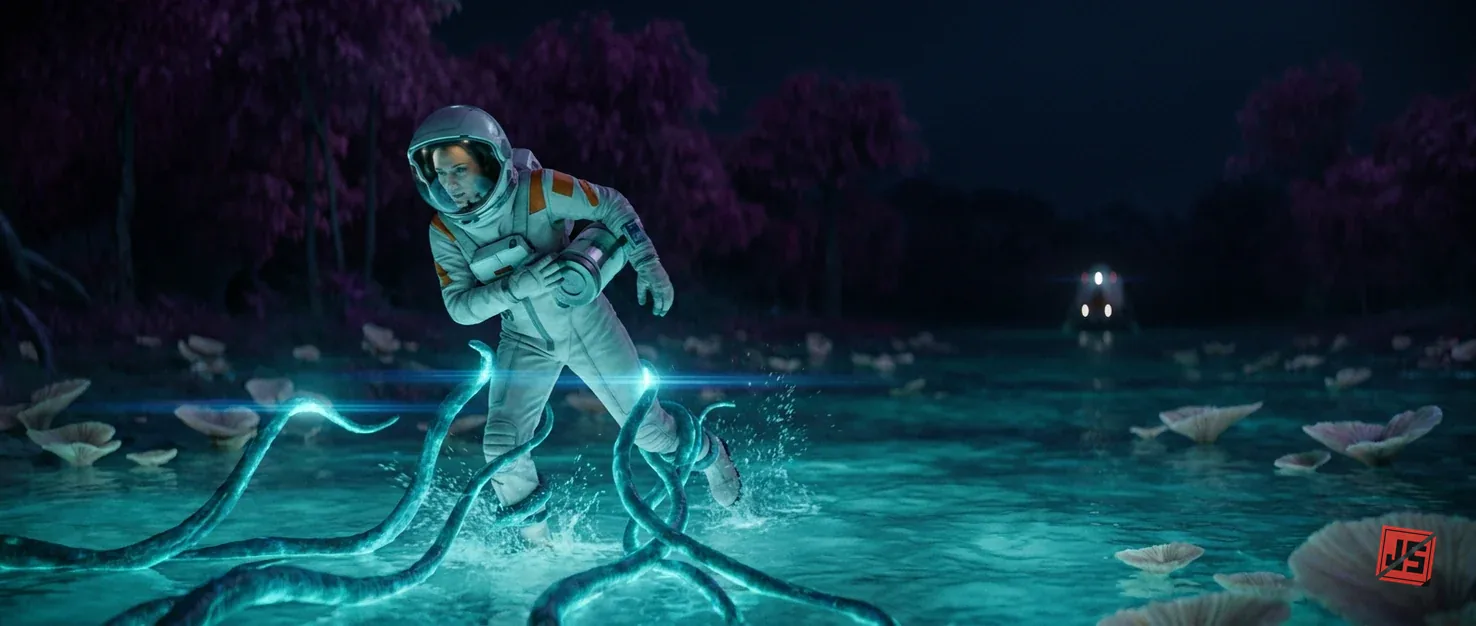
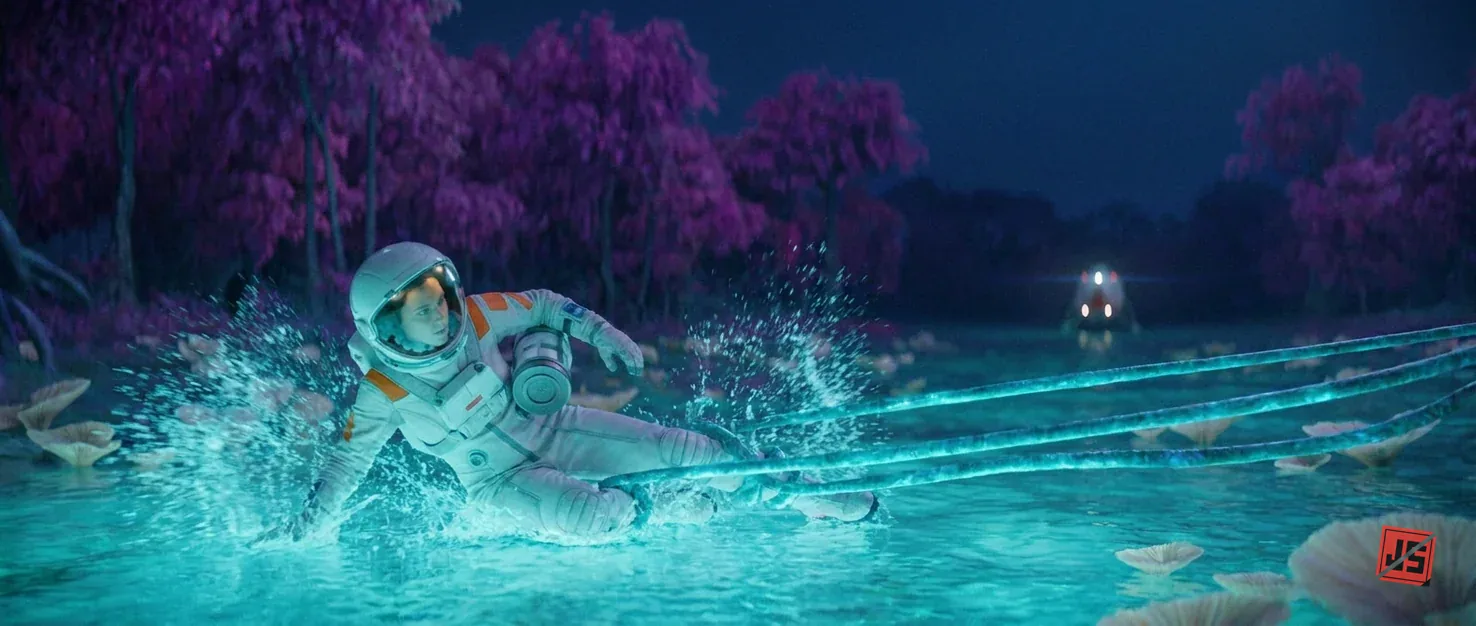
I bracket a shot between two frames instead of describing it. The seizure took three attempts. With only a start frame, the tendrils dissolved. With two frames too close in posture, they held but nothing moved. What worked was a measured distance between start and end, wide enough that the model had somewhere to travel.

The seizure · start frame
The seizure start frame
The seizure · end frame. The gap between these two is the shot.
The seizure end frame. The gap between these two is the shot.
The link shot’s first frame, taken from the end of the shot before it
The frame the dark shot was grown from
The planet, before it had a film around it
The vitrine, staged as a still before it moved

P-03.5Method

Five Things The Model Won’t Do For You

They come in the order they happen. Each one is here because it cost something to learn, and each is followed by the measurement that settled it.

01

Direct the shot, not the prompt

A shot description that reads like a shopping list returns a shopping list. What works on a set works here too: one action, one light source named out loud, the lens implied by the framing, and an explicit list of what must not be in frame. The vocabulary matters more than the length. The word “slow” makes the model shoot in slow motion, so a held shot has to be asked for another way.

Never name another film in a prompt. Once, asking for a certain mood engraved the reference title into the set dressing, where it sat lit and in frame. The take was unusable.

02

Screen every take: the model lies

Shots came back with a voice on them: a narrator calmly reading the prompt out loud under the picture. It is not always audible on laptop speakers, and it is fatal once the shot is scored. Every generated take now goes through speech recognition before it is allowed near the cut, plus a full-resolution pass for text burned into the frame.

Confidence tells you which is which: −0.80 to −1.04 is the recognizer hallucinating on wind, harmless. −0.29 to −0.48 is a real voice reading the prompt. Reject the take.

03

Continuity has to be built

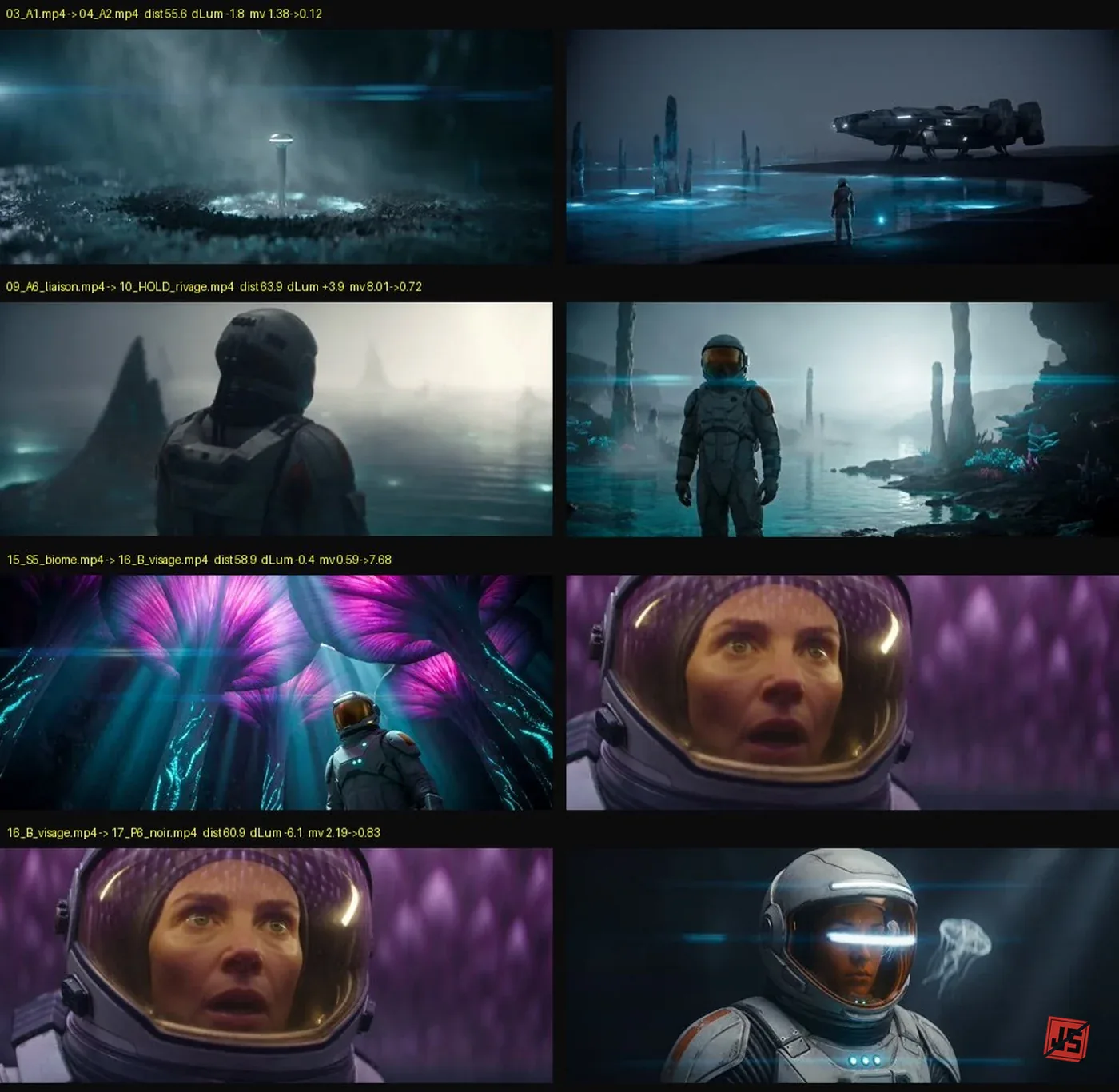
Two shots generated from the same description are two different places. The fix that holds is to generate the next shot from the last frame of the previous one, with a starting image plus a written direction, never an interpolation between two distant frames. Three shots in this film exist only to carry the eye from one place to the next.

The hardest join in the film measured 80.2 before the link shot and 5.7 after.

04

Score it on your own music

The score is built from two original stems, played at their own tempo, never time-stretched. What makes it feel written is that the cues are anchored to images rather than timecodes: the dense section starts on the first frame of the sap burst. Re-cut the film and the score follows by itself. Under it sit 56 sound events: footsteps, hull, tendons, the planet’s pulse. I synthesized all of them for this film, and each one carries its own rule for how far it ducks under a voice. A footstep never ducks. A pad always does.

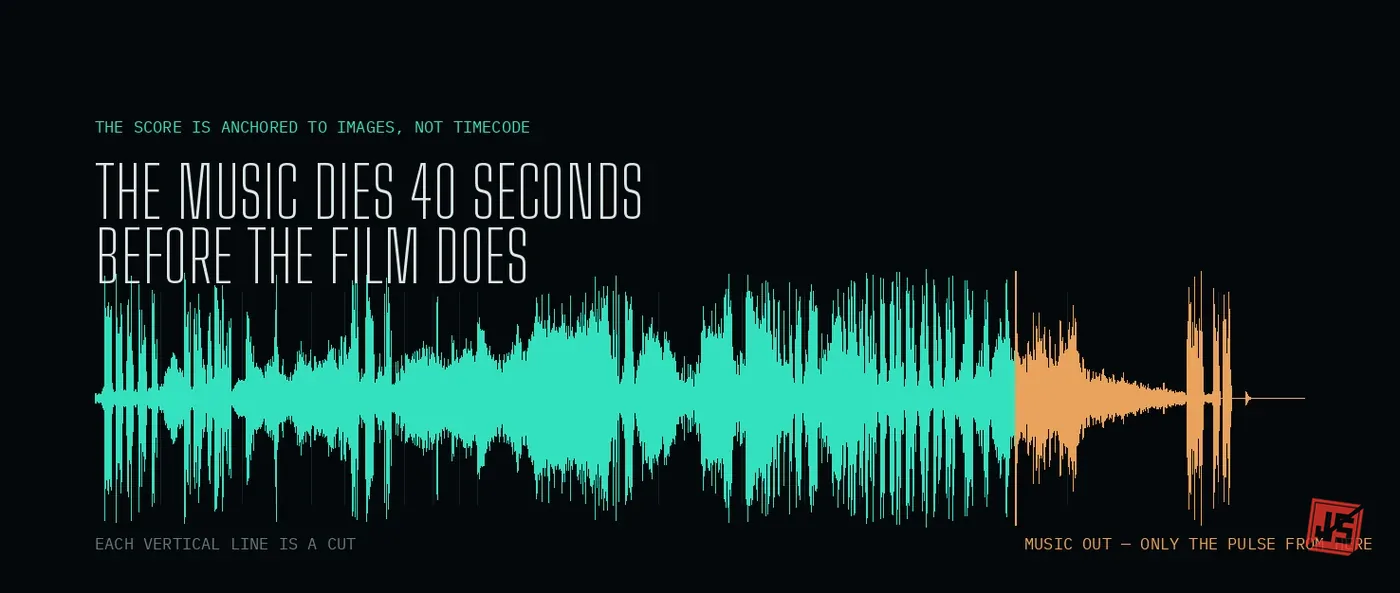
The music dies 40 seconds before the end. What is left is the pulse, slowing from 3.85 s to 4.8 s between beats. The last beat falls 2.0 s after the last word, and then the file is digitally silent.

05

Measure the cut, then trust your eyes

Every join in the film is measured four ways: structural distance, brightness step, saturation step, and whether the motion before the cut matches the motion after. The numbers decide nothing. They find the places worth looking at, and they catch the errors that hide from the eye.

A waveform check caught what listening had missed: the final heartbeat had been silent for three versions. It was synthesized correctly, then zeroed by the end-card fade before it reached the file.
P-03.6The takes

Choosing Between Takes

The model answers the same request with a different shot every time. So you generate several, screen all of them, and keep one: four versions of the seizure’s first frame, four candidates for its last, and the source images the other shots were grown from. Six of these twelve were kept, and they are the ones already shown above, among the starting frames.

The astronaut bent forward in the shallows at night, glowing tendrils wrapped around her legs, magenta forest and the lander’s lights behind her
The seizure the first frame that was kept
The same framing, much brighter: pale sky, violet forest lit up, turquoise water around her
The same take with the sky lifted. The film kept the darker one.
The same moment under a heavy grey sky, the astronaut upright at the right of frame, tendrils gripping her legs, white shells drifting in the foreground
Another take. Storm sky, and she has drifted to the right of frame.
The same moment with a rust-red forest and a pale dusk sky, the astronaut centred, tendrils climbing her legs
Another take. The forest is no longer the colour of the shot before it.
The astronaut still standing, hunched over what she carries, tendrils wound around both legs in the lit shallows
A candidate last frame. Too close to the first: the shot barely moves.
Nearly the same frame, the astronaut lower and more hunched, the tendrils braided tighter around her legs
The same idea, one step further. Still not enough distance.
The astronaut falling sideways into the water in a burst of spray, the tendrils stretched into straight lines running to the horizon
The last frame that was kept: down on her hip, the tendrils pulled straight.
The astronaut fully down in the water, leaning back on one arm, the tendrils taut and straight, spray hanging above her
One take further out. The gap between the two frames is the movement you get.
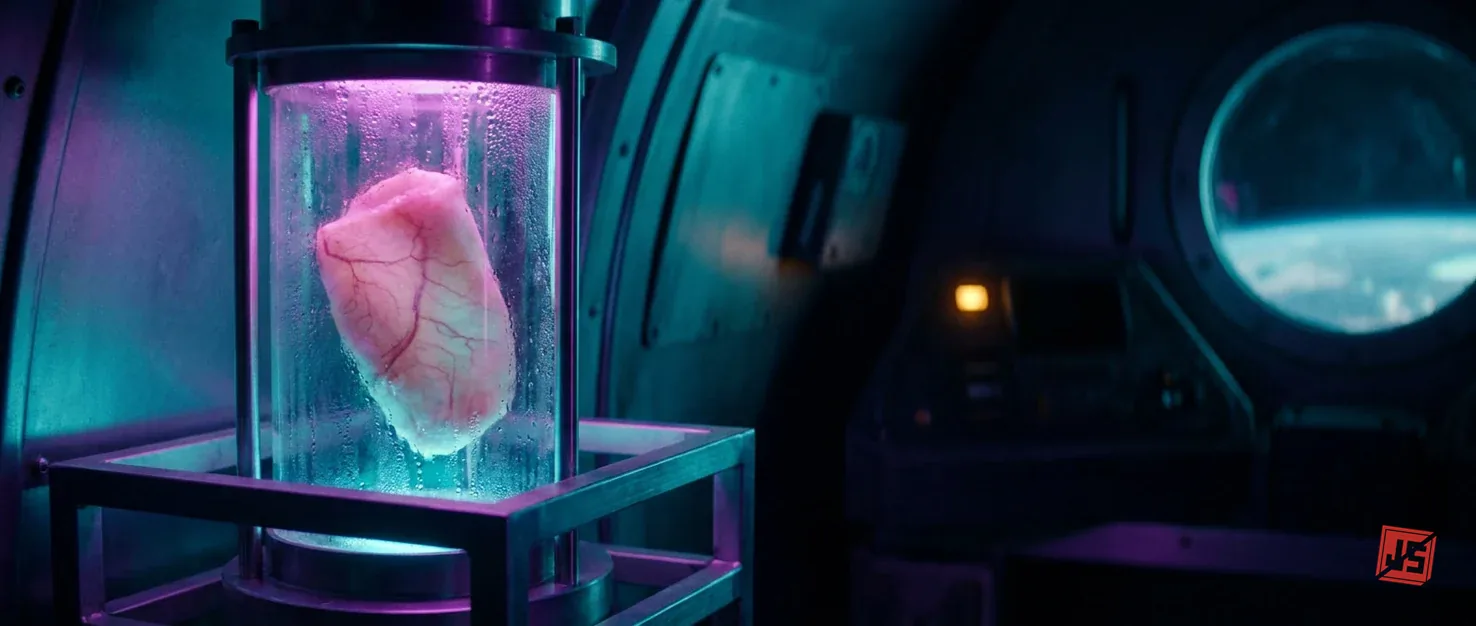
A glass cylinder on a metal frame inside the module, a pale pink organ threaded with red veins suspended in it, condensation on the glass, a porthole behind
The vitrine existed as a still before it existed as a shot
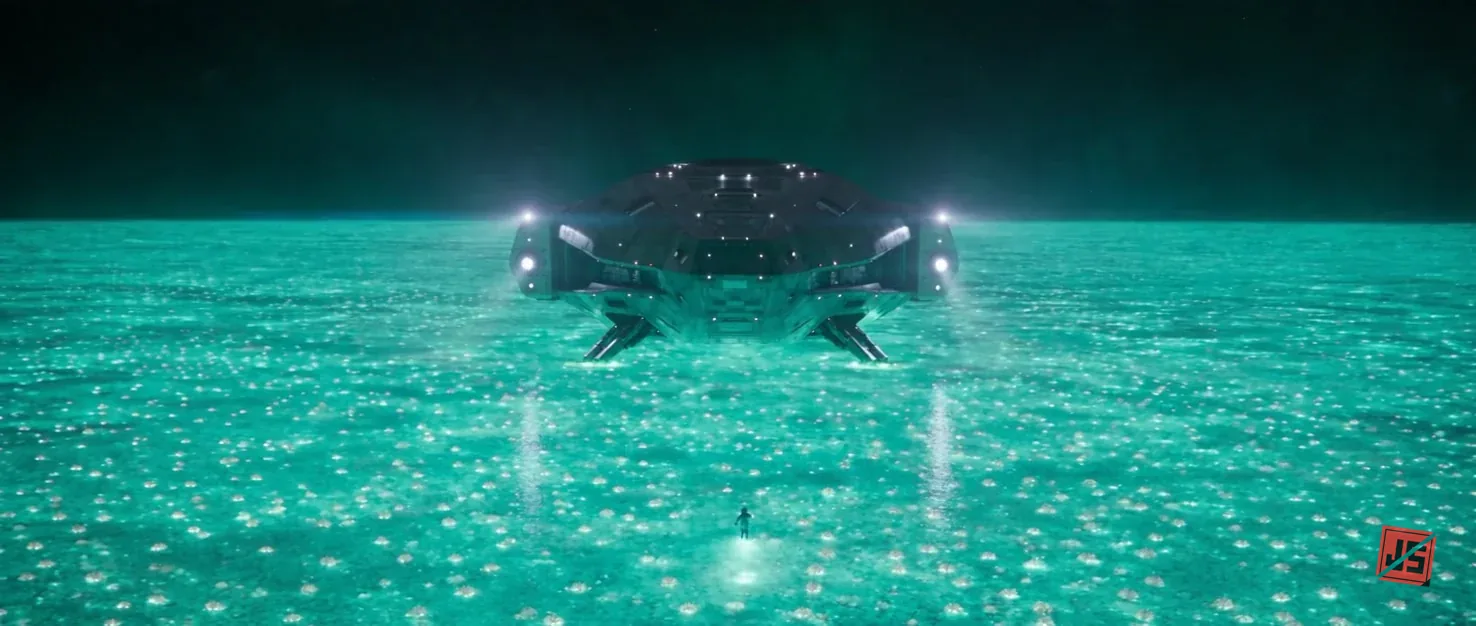
The ship hanging above the luminous plain, two landing lights and two beams reaching the surface, a human silhouette tiny at the centre
The link into the departure starts here — a frame lifted from the shot before
The planet from low orbit: turquoise shallows on one side, the night side veined with violet light, stars above the atmosphere
The planet from orbit: a source image, not a frame of the film
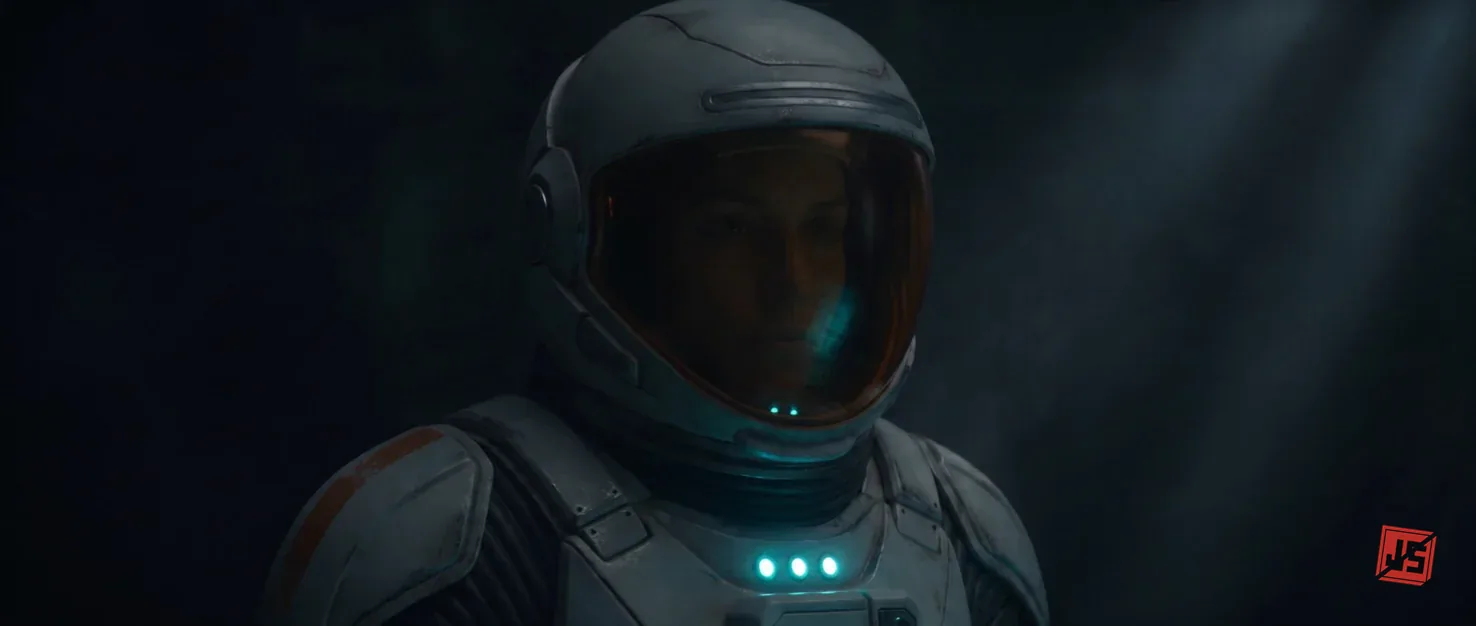
Close on the astronaut in her helmet in a dark interior, a shaft of light from above, three cyan indicators lit at her collar
The dark shot was grown out of this one still

P-03.7Sent back

What Came Back Wrong

The model answers, you look, and sometimes what comes back is not the film. This has nothing to do with taste: a ship rendered as a boat, a face that is not hers, a ring drawn as a perfect circle. Four of these frames were regenerated, and only the corrected version stayed. The last two are later takes on the closing frame, dropped in favour of the first. Here are the ones that were sent back, with the reason.

A sea vessel grounded on the shore at night, its searchlight sweeping the mist, the astronaut standing small in the glowing shallows among stone spires
The ship came back as a boat, a beached hull with its searchlight on.
Close on a spacesuit in the dark, a bearded man’s face reflected in the gold visor, a handheld light glowing at the bottom of frame
The face inside the helmet came back male.
The astronaut seen from behind, walking in flat water among stone spires, a glowing turquoise ring closed cleanly around her legs
The ring around her feet came back as a perfect circle.
A gloved hand aiming a pistol-grip torch at a pale ribbed organism on the seabed, the beam full on it, turquoise veins running through the folds
The instrument turned into a lamp-pistol.
The astronaut standing at the centre of a dark clearing, six wide magenta caps arching over her, cyan cracks lit across the ground
Second version of the vault: the figure takes too much of the frame, and the canopy stops being large.
The astronaut seen from behind in a corridor of tall magenta caps, a shaft of light falling on her, cyan filaments running along the wet ground to her feet
Third version, same fault, one step further: she is almost a foreground. The first version is the one that was kept.

P-03.8Keyframes

The Film, Beat By Beat

Seventeen frames are taken from the finished master, grade included. They follow the film in order: the arrival, the walk, the cut, the answer, the escape.

A dead reading from orbit
Through the cloud deck
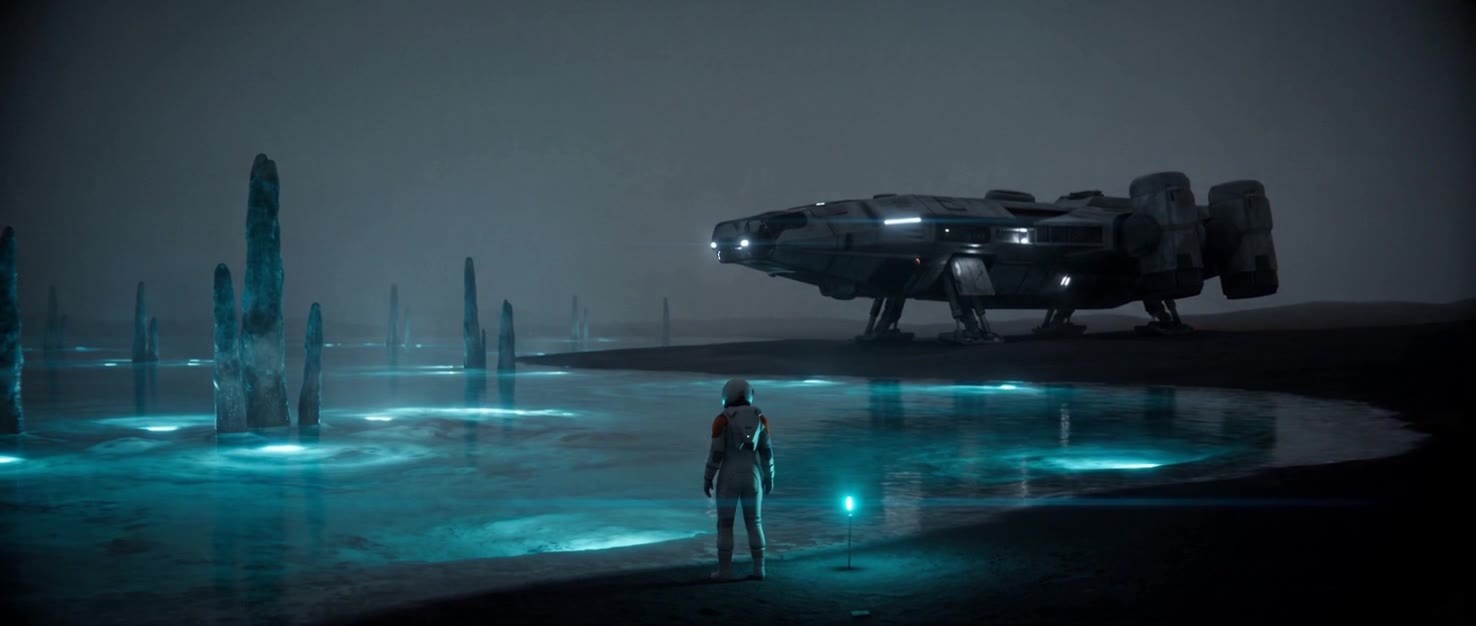
The lander, and the scale of the shallows
First contact with something that unfolds
She stops. The film stops with her.
Into the trunks
Into the trunks
One cut. Minimum depth.
The world bleeds light
The canopy answers
The canopy answers
The only reaction shot in the film
Her lamp dies. Something else is lit.
The run
The run
The plain, alone — the shot that arms the seizure
The ground answers the order
The ramp
The ramp
What she took, still beating
The world becomes an object again

P-03.9Post-production

What The Numbers Catch

The frame before and the frame after five cuts, annotated with their measurements
Here is the frame before and the frame after each re-timed cut. One question decides it: is the first frame of the new shot the frame we meant? Twice, it was not.
Waveform of the film; each vertical line is a cut
This is the whole soundtrack. Each vertical line is a cut, and the amber section is what is left once the music dies, 40 seconds before the end.

VELIS-03 — Making Of

The method in pictures, with the measurements02:02

P-03.10What was cut

It Got Shorter Every Time It Got Better

An entire sequence was generated, scored, and then removed: a full-scale reveal of what she had found, held for ten seconds. It was the most spectacular thing in the film and it stopped the story dead. The departure shot went too. The film already showed her boarding, and telling the same escape twice made it smaller both times. The run through the plain was re-chaptered with its own material: the camera had drifted off her mid-shot and found her somewhere else, and three cuts turned that accident into a deliberate beat of threat.

Three things are still missing, and it is more useful to name them than to hide them. The longest shot in the film is interpolated rather than natively held. The ship is never shown at the scale the story deserves. And the thing she takes is not seen in her hand before it appears in its vitrine. For now, a warm glow rising out of frame stands in for a shot I have not generated yet.

P-03.11The numbers

The Honest Ratio

Running time02:53, from a 02:48 cut plus ident and end card
Shots in the final cut27
Shots generated to get them43
Versions of the cut26
Designed sound events56, all synthesized
Spoken lines, from 25 takes10
Original music stems2, no time-stretch
Delivery loudness−15.0 LUFS
Format1476 × 626 2.36:1

Sixteen shots were generated and never used.

Production log